
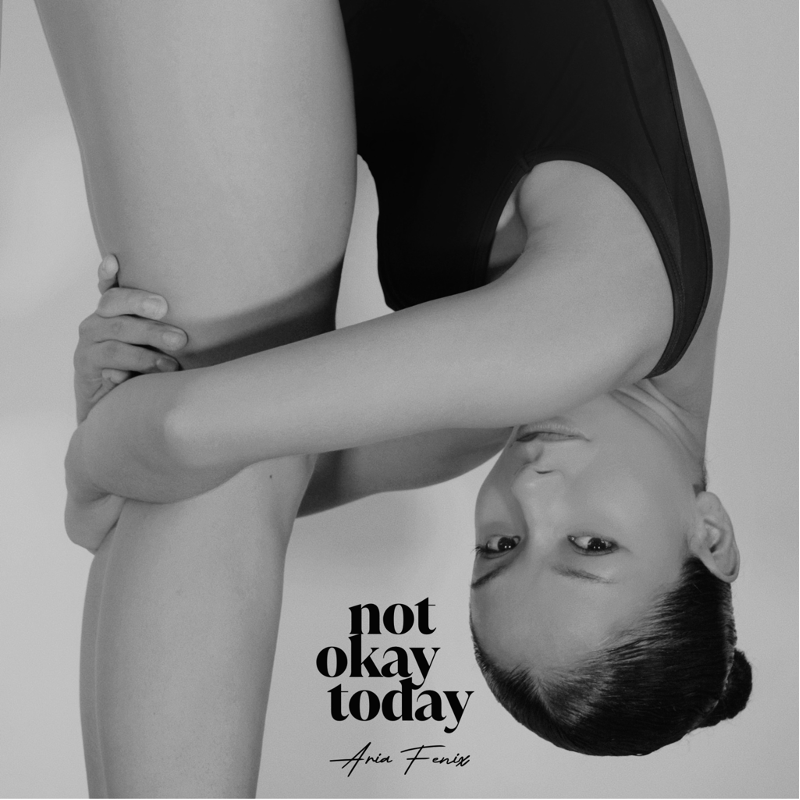

For years, Aria Fenix moved between two creative spaces: the recording studio and the ballet studio. With “Not Okay Today,” those worlds finally meet. The single introduces what Fenix calls Ballet Pop, a creative universe that brings contemporary pop together with ballet’s emotional language, movement, and visual storytelling.
NDO Magazine spoke with Fenix about the personal turning point behind the new era, how dance changed the way she hears and writes music, the heartbreak that inspired the single, and why she sees Ballet Pop as something much larger than a genre.
NDO Magazine: You describe “Not Okay Today” as the beginning of a new era. What changed creatively or personally that made this the right moment to begin that chapter?
Aria Fenix: I remember a very clear moment when I realized I needed a new perspective, not only on my artistic persona, but on my own life.
I’m a dancer too. I practice ballet, pointe, and jazz every week, and I started occasionally sharing little pieces of that journey online. I was honestly unsure about it at first because I’m no ballerina prodigy, haha. I just love and respect dance so much. But my audience really connected with those moments, so it became natural to keep sharing them alongside my music.
Then one day, my husband said something that was very true, although I didn’t know how to take it at first: “If you keep posting so much dance content, people are going to think you’re a dancer instead of an artist. They’re going to think you quit music.”
And he was right, but not quite for the reason I initially thought.
It made me realize there was a discrepancy between how my music was sounding and how my actual life was sounding. I was so proud of how my music had evolved over the years, but I had never stopped to notice that my creative life had evolved, too.
Ballet wasn’t separate from my music anymore. It had become part of the way I experienced emotion, discipline, movement and storytelling. My music needed to reflect this other life that I had always assumed was completely separate from my career as an artist.
That realization became the beginning of Ballet Pop, and “Not Okay Today” is the first time I’m allowing all of those parts of myself to exist in the same world.
NDO Magazine: You’ve said that for years you felt like you were living two creative lives, one as a pop artist and another in the ballet studio. Why did you initially keep those two worlds separate?
Aria Fenix: Honestly, I think I perceived classical music as something I was only allowed to love in secret.
I didn’t have the classical background. I’m not a classically trained musician or a pianist, so I couldn’t really see how I could belong to that world. It felt like a forbidden affair between a pop peasant and a royal prince, haha.
I held that entire classical world in such high regard that I assumed I could appreciate it, but never really participate in it.
And that part is still true; I don’t have a classical background. But I realized I don’t need to pretend I do. I can bring my own perspective to it. I can collaborate with virtuosos and classically trained musicians, learn from them, and allow those worlds to expand one another.
That’s what became so exciting to me: realizing that I didn’t have to choose between the music I came from and the music I had always secretly loved. I could create a space where they could meet.

NDO Magazine: How long have you been training in ballet, and what role has ballet played in your life outside of music?
Aria Fenix: I’ve been training in ballet for almost four years, and there is honestly nothing that has taught me more about resilience, mental strength, physical strength, and grit.
Ballet changes the way you think. Even from my perspective as a medical doctor, I’m fascinated by what it does to the brain, how repetition, coordination, musicality, and movement create new neural pathways. I can actually feel that expansion carrying over into the way I write songs, sing, and interpret music more mindfully.
Earlier this year, my teacher told me I was ready to go on pointe, the pink satin shoes you associate with ballet. That has been a whole new journey in itself, and I’m still very much in the middle of it.
I’m excited to share that honestly with my audience, not as someone who has mastered ballet, but as someone who is allowing herself to be transformed by it.
And that has become such a beautiful part of creating as Aria. I’m letting myself be carried away by the way ballet is expanding my pop world and helping me build a completely new sonic and visual universe.

NDO Magazine: You’re calling this new creative universe “Ballet Pop.” How would you define Ballet Pop for someone discovering the concept for the first time?
Aria Fenix: I think of Ballet Pop as contemporary pop falling in love with ballet’s emotional language.
It’s not simply pop music with classical instruments layered on top. Ballet has always been one of the richest emotional languages I know. It can communicate longing, obsession, heartbreak, triumph, and tragedy through movement, music, and storytelling, often without saying a single word.
Ballet Pop brings that emotional language into contemporary songwriting. You might hear live strings and piano alongside modern pop production and beats, but the goal is bigger than the instrumentation. It’s about creating music that feels cinematic, theatrical, and deeply emotional.
In a way, it’s what happens when music and ballet finally fall in love.


NDO Magazine: Is Ballet Pop primarily a musical genre, a visual and performance concept, or do you see it as something that encompasses all of those elements?
Aria Fenix: Definitely all of those things.
I’ve never really seen myself as someone who could simply stand still and sing. I love moving too much. Even before I was seriously training in dance, I loved having dancers around me and building a whole performance rather than just singing my heart out.
What really moves me is performing and storytelling, and that encompasses much more than singing. It includes movement, acting, music, visuals, and the emotional world surrounding a song.
So Ballet Pop naturally became bigger than a genre for me. It’s a creative universe where all of those things can speak to each other.
And I think what makes it especially meaningful is that ballet was never an aesthetic choice for me. I know ballet has become very trendy lately, and a lot of artists and brands are incorporating its visual language. But I even hate pink. I was never the pink ballet girl, haha. What attracted me was the discipline, the work, the emotional depth, and the storytelling.
So I don’t feel like I’m competing with anyone or trying to claim an aesthetic. This is simply the world I’ve been building through my own experience. My journey can’t be borrowed, because it’s mine.

NDO Magazine: How does ballet influence the actual sound and production of “Not Okay Today,” beyond the choreography and visual presentation?
Aria Fenix: I think ballet changed the way I write and listen to music, not just the way I move to it.
As I became more aware of things like suspension, release, accents, and softness in my body, I started noticing how closely those qualities relate to music too, especially the difference between something that feels more legato and something more staccato. I think that made me much more conscious of the physicality of what I was writing and producing. I would almost feel the cadence and rhythm of a melody in my body before I could put it into words.
I was also so inspired by the instrumentation I kept hearing around ballet. We incorporated some of those very recognizable elements, like strings, piano, and brass, and placed them alongside elements that are much more part of my pop language, like beats and synths. Stefano Manrique, my husband and an incredible producer, has been incredibly important in shaping that sonic identity through the production and mixing of the music, and he also created the arrangements for the live violinist based on Tchaikovsky’s Swan Lake. So the sound of the song naturally became this meeting point between the ballet world that was inspiring me and the pop world I already came from.

NDO Magazine: Why was “Not Okay Today” the song you chose to introduce listeners to Ballet Pop?
Aria Fenix: One of the things I love most about ballet is its grandiosity and its willingness to be dramatic. It isn’t afraid of vulnerability, and it isn’t afraid to go all the way with an emotion.
“Not Okay Today” came from a very real and very painful experience of being cheated on. There was love, attachment, grief, rage, guilt, this completely wild, chaotic roller coaster of emotions. And those emotions are not small.
Sometimes I feel like pop can be a little restrained in the way it expresses those bigger emotions. This song had been sitting with me for years, and I had actually been trying to hide it. But when I started building Ballet Pop, I realized it was the perfect song to finally let everything out, to tell that story with the emotional language of ballet.
It felt like the most honest introduction to this new world.
NDO Magazine: What is the story or emotion behind “Not Okay Today,” and what did you want listeners to feel when they heard it?
Aria Fenix: I deeply cared about that relationship, and I fought very hard for it. Looking back, I think that “fighting” so hard for love probably said something deeper about not feeling worthy of simply receiving the love someone was willing to give me.
So I wouldn’t describe the song as being about one emotion. It feels more like moving through different emotional passages, the way grief works, or, as I sometimes joke, like going through the different passages of Dante’s Inferno. There are different circles, different days, different versions of yourself. Some days are better than others.
Healing is messy. Getting over something is not linear, and I wanted the song to be honest about all of it, even the chaos, the anger, and the occasional pettiness.
More than anything, I want listeners to give themselves permission to feel it all, however it comes. And hopefully, somewhere in that process, remember that you’re going to be okay, even on the days when you genuinely don’t feel okay today.

NDO Magazine: The title itself feels very direct and vulnerable. Was there a particular experience or period in your life that inspired the song?
Aria Fenix: Yes. The song was inspired by a very real period in my life when I was cheated on, and it came from a place that was incredibly raw at the time.
But what makes revisiting the song interesting to me now is that I’m happily married, and very much not married to that person, haha. So there’s a beautiful distance between who I was when I wrote it and who I am now.
The wounds have healed, but there was so much to learn from that experience. I can revisit those emotions now, perform the song, and even laugh about certain parts of the story without being consumed by the pain.
In a strange way, that makes the song more fun to perform. I’m not reliving the heartbreak anymore. I’m telling its story. A story that was once mine, but now belongs to so many people who have been there, or who are currently there.
NDO Magazine: How are you incorporating movement and choreography into the storytelling surrounding this release?
Aria Fenix: The emotions in this song were first expressed through melody, and then translated into words. From there, the arrangement and instrumentation became another layer of that emotional language. Even if you listen to the instrumental version, I want you to be able to travel through the same emotional journey without the lyrics telling you what to feel.
That made the next question very natural for me: how can movement support and tell that same story? How does my body naturally respond when it hears the song?
There have been two dancers who have been key to this exploration. My ballet teacher and mentor, Mateo Vega, has been part of developing my musicality. The first time Mateo heard the finished song, he cried, which was incredibly special to me because he has watched me grow not only as a dancer, but as an artist as a whole.
And David Moreno, a dancer and audiovisual artist and actually my jazz teacher, has also brought his creative perspective into the process, helping translate what we have all built through sound into visuals and movement.
We also created an orchestral version and a piano version specifically for ballet class. That was fascinating because ballet-class music is incredibly precise and structured. Mateo and I worked with a pianist to make sure the arrangement was actually functional for dancers, and then we tested it in class. Seeing an entire room of dancers doing an exercise to a ballet-class version of my own song was one of those surreal “wait, this is actually happening” moments.
Even the cover art became part of that conversation. I’m doing a souplesse, a movement we use frequently in ballet, and I was inspired by the Mona Lisa effect. You can’t quite tell whether I’m smiling or angry. I wanted that ambiguity because grief can feel exactly like that. It can hold completely contradictory emotions at once.
The photograph is minimalistic, almost intentionally understated, because that was also how I felt when I was living through that period. I didn’t want to dress up the pain or make it bigger than it already felt.
And now we’re taking that same question into the music video. We’re working with dancers and choreographers to explore how each movement can support the same emotional story the melody, lyrics, arrangement, and instrumentation have already been telling.
That’s the visual phase we’re creating right now, and it’s been amazing to watch the song keep expanding into different artistic languages. I love the interdisciplinarity of it, and how a story that started with me can become something that many different artists bring their own gifts to.

NDO Magazine: Do you envision ballet and choreography being an important part of every release within this upcoming album era?
Aria Fenix: Absolutely. I feel like I’m a new artist, not because I changed, but because I’m finally allowing all these different parts of myself to reconcile.
There’s something scary about breaking the mold, especially when you’ve spent years building an identity, but doing it authentically, rather than just for the sake of being revolutionary, is incredibly freeing. It has also made me much more creative and resourceful because my idea of what I can create musically and artistically has expanded so much.
So I don’t think there’s really any turning back. Ballet has officially become part of my DNA as an artist.
The whole album revolves around this Ballet Pop sonic identity, with little hidden gems that pay homage to iconic ballet works I love, like Swan Lake in “Not Okay Today.” I think it will be fun for ballet fans to discover those references along the way.
And I’m also still growing as a dancer. The more I improve, the more I want to challenge myself creatively. So I’m excited to see how that evolution continues to shape each release.


NDO Magazine: You mentioned that Ballet Pop will extend into an upcoming album. What can you share about the album at this stage?
Aria Fenix: We already have around eight songs written and four pre-produced, so the world is really starting to take shape.
What excites me most is that I’m not trying to be overly strict about genre. Ballet Pop feels much more like an emotional and musical language than a genre box. Every song can find its own sound while still belonging to the same universe.
For example, one of our favorite upcoming songs is called “Jump.” It has a very contemporary pop foundation, with even a little bit of drum and bass, but then the orchestral elements bring in that ballet side and create something that feels fresh while still having this timeless, almost classical elegance.
And I don’t want to spoil too much yet, but the album is a story, and each song is a chapter. They just won’t be released in chronological order. I want my listeners to collect these individual pieces of the puzzle, and when the full album is finally there, they’ll see how they fit together as a whole.

Movement is central to the Ballet Pop storytelling process.
NDO Magazine: Will the album continue exploring the intersection between contemporary pop, ballet, and visual storytelling, or will listeners hear other influences as well?
Aria Fenix: Absolutely, that intersection is the main framework, but I still want the music to breathe.
Pop itself is such a wide universe. There can be a power ballad, something more contemporary, or even a song with a little bit of rap that connects to my Latin background. I don’t want to limit the songs just because they belong to the same project.
For me, it’s about serving each song in the way that feels most honest to it, exploring different sides of the pop spectrum while allowing the ballet language to blend naturally into each one.
So the songs can have very different personalities, but they should still feel like they belong to the same world.
NDO Magazine: Do you see Ballet Pop as something specific to this particular project, or are you hoping to establish it as a larger artistic identity moving forward?
Aria Fenix: Ballet has become embodied in me as a dancer, as a performer, and as a songwriter. Right now I’m in love with this sonic universe we’ve created, yet regardless of where the music goes genre-wise, I don’t think I could ever go back to the person I was before I found this inspiration.
NDO Magazine: NDO Magazine has had the opportunity to be part of your story before. Looking back at the artist we first covered compared with where you are now, where do you see the biggest evolution in yourself?
Aria Fenix: I think the girl you interviewed at the beginning of 2026 was already ready for a transformation. I remember answering that interview while I was on vacation, in this very peaceful place that, looking back, almost felt like the kind of place you visit when you’re ready for a big shift.
That girl had no idea what was coming, haha.
What happened afterward felt like an integration. I stopped trying so hard to separate the different parts of myself, and I became much less focused on the outcome, the numbers, and the external validation. I’m much more interested now in the depth of the work itself, because I know that when the work becomes more honest, the results can follow.
And interestingly, they have started to follow in ways that feel very meaningful to me. “Not Okay Today” was featured on Apple Music’s Pop in Spatial Audio alongside incredible artists like Ariana Grande and Olivia Dean. That was my first major editorial achievement as a solo artist. I had experienced editorial moments before through duets with my husband, Stefano, whose career has a much longer trajectory, but it had never happened with one of my solo releases.
So having that happen with my first Ballet Pop single felt like a beautiful reassurance that we’re moving in the right direction.
I think the biggest evolution is that I’m no longer trying to prove that I belong in a particular place. I’m much more interested in building the place that feels true to me.

Fenix says Ballet Pop is an integration of the creative parts she once kept separate.
NDO Magazine: What have you learned about yourself as an artist by finally allowing these two sides of your creative life to exist together?
Aria Fenix: I think probably the biggest lesson is that I don’t need to make myself smaller or more easily categorized in order to be understood.
The reality is, I’m not just an artist, not just a dancer, not just a medical doctor, not just an actress. I’m all of those things, and there’s no way that’s wrong. The only thing that was wrong was thinking that it was.
Now I’m much more interested in following my curiosity and allowing discipline and playfulness to coexist. I think those things actually make me more creative, not less.
NDO Magazine: When people experience “Not Okay Today” for the first time, what do you hope they understand about the artist you are becoming?
Aria Fenix: I hope people hear an artist who is willing to take risks, to be emotionally honest, and to build something that feels bigger than a single song or genre. An artist who is much more interested in telling the truth than fitting into a category.
And maybe, most importantly, I hope they understand that I’m not trying to become someone else. I’m finally becoming more of myself, with all my colors, all the different sides of me, and even the things that might seem contradictory at first.
If people can see and hear that in this journey, hopefully it can reflect something back to them about their own lives too. Because I think this is bigger than me as an artist. It’s about reclaiming your power over your own narrative and realizing that you don’t have to choose between the different parts of yourself. They can all belong to the same person.

A Ballet Pop portrait from Fenix’s new visual world.
NDO Magazine: Finally, after the curtain rises on “Not Okay Today,” what should fans be watching for next?
Aria Fenix: “Not Okay Today” is only the first chapter of this story, and we went big with it because it deserved to be big. My ballet teacher actually told me, “I don’t know what you’re going to do next,” because we went all in with such a grand production. And honestly, I’m not worried about that, because this journey is being led by curiosity.
The upcoming songs are each so special in their own ways, and I can’t wait to keep releasing them and have more and more people follow along.
“Not Okay Today” is out now on all platforms, including the full song, the instrumental, the orchestral version, the piano version created specifically for ballet class, and Dolby Atmos versions as well. And what’s coming right up next is the music video. It’s going to be quite a little movie. We’ve been rehearsing and planning so much, and I can’t wait to finally shoot it and share it. The video will also be choreographed with a special cameo by Gio Ravelo, one of Colombia’s most internationally recognized ballet dancers and choreographers.
In the meantime, we’ve also created The Ballet Pop Diaries, a comedy-documentary series about my daily life and what it’s actually like to be a pop artist learning ballet, how ballet has slowly taken over my life, and where this music came from. We’re currently on episode five, and the series will keep moving between the ballet studio and the recording studio, which is such a fun intersection of my two worlds.
And there’s another secret project I’ve been working on too. It’s my own skincare line, Entrelacé. And I actually can’t believe this is the first time I’m announcing it out loud! As a medical doctor, I’ve always been passionate about wellness and longevity, and as an artist and dancer, I’ve become especially interested in what skincare looks like for bodies in motion, how sweat interacts with the skin, and what our skin actually needs when we’re constantly moving.
Entrelacé is natural skincare for bodies in motion, built around a philosophy of discipline, art, and medicine. I’m building it alongside Dr. Solimar Álvarez, MD, my best friend, a physiatrist and pain and fascia expert, and our team of dancers, medical doctors and scientists. She practices jiu-jitsu, so even though we come from completely different movement disciplines, we share this understanding of discipline, biomechanics, and what it means to live in a body that is constantly in motion.
I want people to be able to step into this universe, not just listen to it. To hear the music, see the movement, experience the visuals, discover the stories, and eventually even experience it through things like touch and scent, while fulfilling something deeper in me: the desire to create beautiful things that contribute to health, wellness, and a sense of wellbeing. That has always been an important part of me as someone who studied medicine, and I think it’s something I’m finally allowing to exist alongside my love for art.
I want it to feel immersive, like entering a world where everything belongs to the same story. The Ballet Pop album is the soundtrack to that universe, but the universe itself is much bigger than an album.
Release information
Streaming link: https://www.submithub.com/link/aria-fenix-not-okay-today
Songwriters: Aria Fenix / Rachel Siegel / Stefano Manrique
Producer & Mixing: Stefano Manrique
Mastering: Harrison Tate, The Hit Lab
Editorial note: Statements about playlist placement, collaborators, professional credentials, and upcoming projects are presented as provided by Aria Fenix in her interview responses and press materials.